Can I Study the Bible Online at My Own Pace?

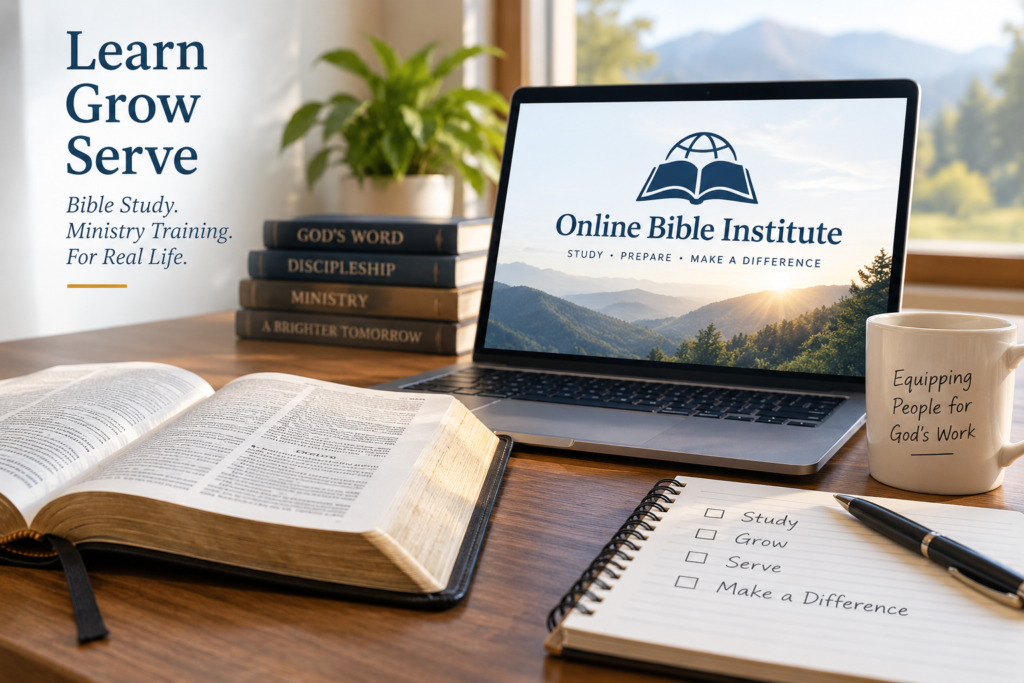
Yes. Self-paced online Bible study allows students to work through biblical and theological learning materials according to their own schedules, within any requirements established by the course provider. This approach can be especially helpful for people balancing employment, family responsibilities, church involvement, and other commitments while pursuing serious Christian education.
At Online Bible Institute, flexible online learning makes biblical education accessible to students in many different life circumstances.
What Does Self-Paced Bible Study Mean?
Self-paced learning generally means that students are not required to attend every lesson at a particular weekly meeting time.
Instead, they work through course materials, readings, lessons, and assignments according to the structure of the program.
Specific courses may still include requirements for participation, assessment, or completion.
The flexibility lies in how students organize their study time while fulfilling those expectations.
Who Benefits From Self-Paced Online Bible Courses?
Self-paced learning can be especially valuable for working adults, parents, church volunteers, ministry leaders, retirees, and students living far from traditional educational institutions.
It can also serve people whose schedules change from week to week.
A person working irregular hours may find it difficult to attend a fixed classroom schedule but still be able to study consistently during available periods.
Does Flexible Learning Mean the Courses Are Easy?
No. Flexibility and academic seriousness are not opposites.
Students still need to read carefully, engage course materials, reflect on what they learn, and complete required work.
In some ways, self-paced learning requires greater personal discipline because students must organize their own time.
A flexible schedule provides opportunity, but meaningful learning still requires commitment.
How Much Time Should I Set Aside?
The answer depends on the course and your learning goals.
Some students may be able to devote several hours each week. Others may need to begin with shorter study sessions.
Consistency is usually more valuable than an unrealistic schedule that cannot be maintained.
For example, three focused sessions of thirty to forty-five minutes may be more productive than planning one long session that continually gets postponed.
How Can I Stay Motivated Without a Traditional Classroom?
Begin with a clear reason for studying.
Are you hoping to understand Scripture more deeply? Prepare for ministry? Develop theological foundations? Strengthen your service in a local church?
Then establish a realistic schedule.
Keep notes, review what you learn, and periodically reflect on how your studies are influencing your understanding of God and your everyday discipleship.
Where a course includes student discussion or other learning activities, participate thoughtfully.
Should I Study Individual Courses or Follow a Program?
Both approaches can be valuable.
Individual courses allow students to explore specific interests or needs. A structured program provides a more intentional sequence of learning.
Students who are just beginning may want to explore the OBI course library before deciding whether to pursue a longer educational pathway.
Those interested in a more comprehensive approach can review the available Bible Institute programs.
Can Online Bible Study Prepare Me for Ministry?
Yes. Online biblical education can provide valuable preparation for teaching, discipleship, leadership, pastoral care, evangelism, and other areas of Christian service.
However, education should be connected with practical experience and Christian community.
Studying leadership is valuable, but so is learning to serve real people. Studying biblical interpretation is important, but so is learning to communicate Scripture faithfully.
Students interested in ministry preparation may wish to explore the Certificate in Christian Ministry.
Why Is Local Church Involvement Important?
Online education can provide teaching and learning resources, but Christian formation is not intended to happen in isolation.
The local church provides opportunities for worship, prayer, relationships, accountability, service, and the practical application of biblical truth.
Hebrews 10:24–25 encourages believers to consider how to stir one another toward love and good works while continuing to gather together.
Online learning should strengthen participation in Christian community rather than replace it.
How Do I Know Which Courses Are Right for Me?
Begin by considering your present level of biblical understanding and your goals.
A student new to formal biblical education may benefit from introductory courses in Bible study, the Old Testament, the New Testament, and basic Christian theology.
Someone already involved in ministry may be ready for more focused courses in leadership, teaching, pastoral ministry, or discipleship.
You can also review the course providers represented within the Online Bible Institute learning environment.
What Is the Best Way to Begin?
Start with one manageable commitment.
Choose a course that interests you. Establish regular study time. Read the course expectations carefully. Complete the learning activities thoughtfully.
Most importantly, remember why you are studying.
Biblical education is not simply about collecting information or completing courses.
Its deeper purpose is to help us understand God’s Word, know Jesus more fully, grow in wisdom, and become better equipped to serve others.
For additional resources in Bible study, spiritual growth, ministry training, and church health, explore Bible Institute Network.
Self-paced study gives you flexibility in when you learn. Faithful discipleship gives your learning its purpose.